
Singapore Market & Trade Intelligence: Positioning Across Asia and Emerging Trade Corridors
Singapore's position on the Strait of Malacca has made it one of the world's leading maritime, aviation, logistics and financial hubs. This research maps its trade structure, its principal partners, and the new corridor opened by the MERCOSUR–Singapore Free Trade Agreement.
- Published
- August 25, 2026
- Reading time
- 11 min read
- Region
- Southeast Asia
- Industry
- Trade, Logistics & Electronics
- Author
- Momentum Miles Research
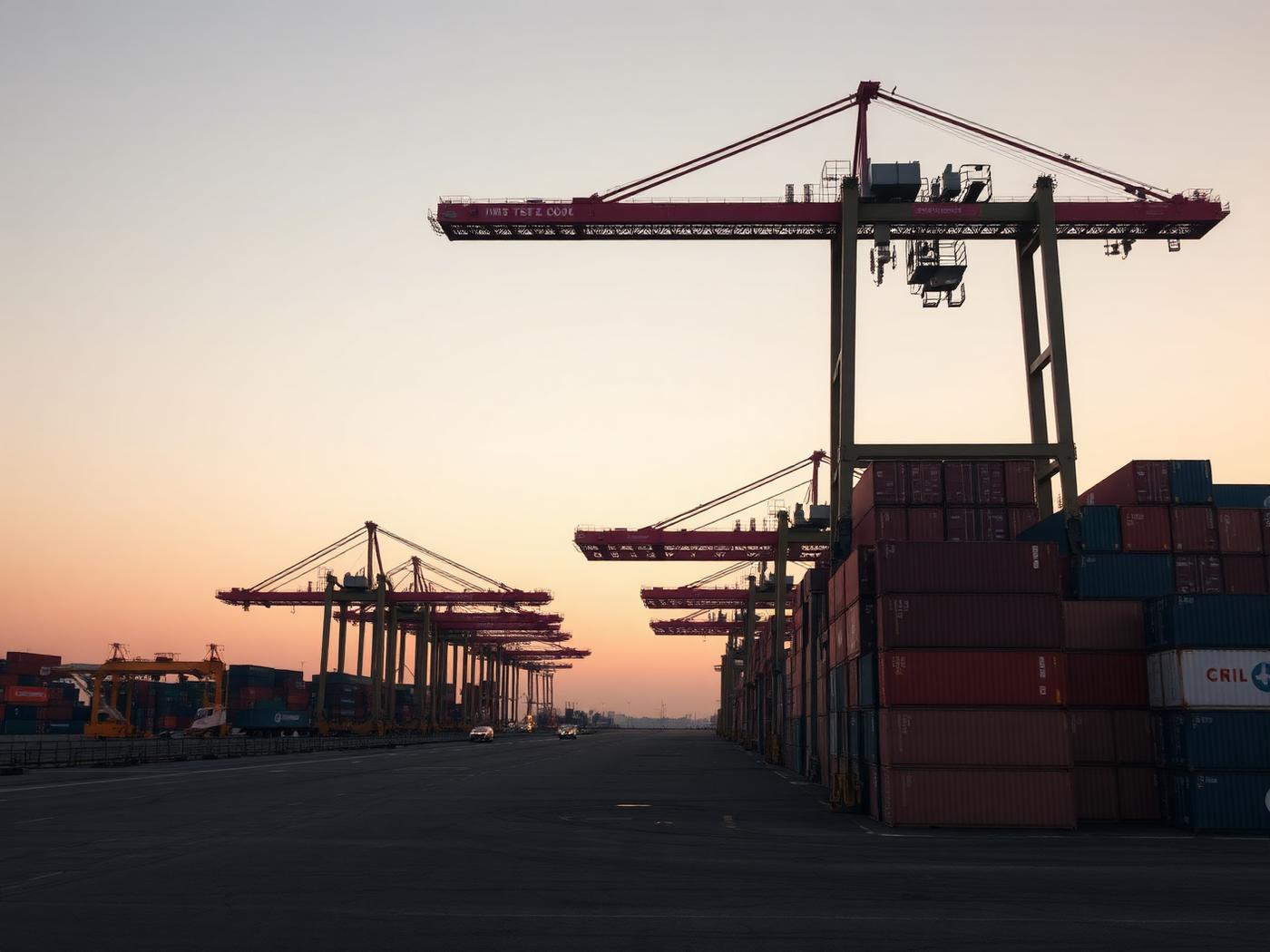
- Singapore recorded nominal GDP of US$659.57 billion in 2026, GDP per capita of US$107,758 and projected real GDP growth of 3.5%, on a population of approximately 6.11 million.
- Its export base is concentrated in integrated circuits, electronics, pharmaceuticals, refined petroleum and precision instruments, sold principally into China, Malaysia, the United States, Hong Kong and Indonesia.
- The MERCOSUR–Singapore Free Trade Agreement entered into force with Paraguay in February 2026, Uruguay in March 2026 and Brazil in August 2026 — Singapore's first agreement with a South American bloc.
- Rules of origin allow non-originating materials where goods undergo sufficient processing in Singapore and meet the applicable Product Specific Rule, which matters for electronics.
- SAFTA, in force since 28 July 2003, eliminated all tariffs and remains the central pillar of the Australia–Singapore economic relationship.
Singapore is an island city-state at the southern tip of the Malay Peninsula, bordered by the Strait of Johor to the north, separating it from Malaysia, and the Singapore Strait to the south, separating it from Indonesia. Its location places it along one of the world's busiest maritime trade routes — the Strait of Malacca — through which a significant share of global trade passes. That position has enabled Singapore to become one of the world's leading maritime, aviation, logistics and financial hubs.
- Nominal GDP (2026)
- US$659.57BNominal GDP (2026)
- Projected real GDP growth (2026)
- 3.5%Projected real GDP growth (2026)
- Population (as at 30 June 2025)
- 6.11MPopulation (as at 30 June 2025)
- Land area
- 735.7 km²Land area
Nominal GDP per capita is recorded in the source material as “US$107,758 billion”. We reproduce the figure as supplied rather than restate it.
According to the latest official population statistics released by the Singapore Department of Statistics and the National Population and Talent Division, Singapore's total population stood at approximately 6.11 million as of 30 June 2025, which remains the latest official population figure available in 2026. The currency is the Singapore Dollar (SGD) and the time zone is Singapore Standard Time (UTC +8).
Singapore is a member of the Association of Southeast Asian Nations (ASEAN), a regional intergovernmental organization established on 8 August 1967 through the ASEAN Declaration to promote economic growth, social and cultural development, regional peace and stability, and political and security cooperation among member states. The ASEAN Secretariat is headquartered in Jakarta.
Language and the commercial environment
Under the Constitution of the Republic of Singapore, Part 13 (General Provisions), Article 153A (Official Languages and National Language), current version as at 17 May 2026, four languages hold official status.
- English (58.1%)
- The primary language of business, government, education, law and daily communication. It serves as Singapore's common working language.
- Mandarin Chinese (26.6%)
- Widely used by the Chinese community in homes, education, media and business with Chinese-speaking markets.
- Malay (9.0%)
- Singapore's national language, used mainly within the Malay community, in cultural and religious activities, the national anthem and military commands.
- Tamil (2.0%)
- Used primarily by the Indian community in education, media, religious institutions and community activities to preserve its cultural heritage.
The percentages refer to the language most frequently spoken at home by Singapore residents (General Household Survey 2025, published in 2026). They do not represent language proficiency or workplace usage.
Trade structure: where goods go and where they come from
According to the Singapore Department of Statistics (SingStat) and Enterprise Singapore (latest trade data updated 18 May 2026), Singapore's major export destinations and the products they are most receptive to are as follows.
| Destination | Products |
|---|---|
| China | Integrated circuits (semiconductors), electronic components, machinery, petrochemicals, pharmaceuticals, precision instruments |
| Malaysia | Refined petroleum products, electronics, machinery, chemicals, processed food products |
| United States | Pharmaceuticals, semiconductors, integrated circuits, medical devices, other high-tech manufactured products |
| Hong Kong | Electronic components, integrated circuits, telecommunications equipment, re-export goods |
| Indonesia | Refined petroleum products, chemicals, machinery, electrical equipment, processed food |
| Japan | Electronic components, chemicals, pharmaceuticals, precision instruments, industrial machinery |
| South Korea | Petrochemicals, integrated circuits, chemicals, industrial machinery |
| India | Petroleum products, electronic equipment, machinery, chemicals, precious metals |
| Taiwan | Semiconductors, integrated circuits, electronic components, precision engineering products |
| Thailand | Machinery, electronics, chemicals, refined petroleum |
| Source | Products |
|---|---|
| China | Electronics, telecommunications equipment, machinery, industrial components, consumer goods, manufactured products |
| Taiwan | Integrated circuits, electronic components, precision engineering products, machinery |
| Malaysia | Crude petroleum, natural gas, refined petroleum products, food products, chemicals, electrical equipment |
| United States | Pharmaceuticals, aircraft and aircraft parts, integrated circuits, medical equipment, industrial machinery |
| South Korea | Semiconductors, petrochemicals, steel products, machinery, electronic components |
| Japan | Industrial machinery, motor vehicles and parts, precision instruments, chemicals, electronic equipment |
| Indonesia | Crude oil, natural gas, coal, agricultural products, food commodities |
| Saudi Arabia | Crude petroleum and petroleum feedstocks for Singapore's refining industry |
| Australia | Liquefied natural gas, coal, agricultural products, meat, cereals, minerals |
| Germany | Industrial machinery, pharmaceuticals, chemicals, engineering equipment, automobiles |
Source: Singapore Department of Statistics, Singapore International Trade 2025 (published 12 March 2026) — latest official merchandise trade statistics.
A new corridor: the MERCOSUR–Singapore Free Trade Agreement
MERCOSUR — Mercado Común del Sur, or Southern Common Market — is a regional trade bloc established in 1991 by the Treaty of Asunción to promote free trade and the fluid movement of goods, people and currency among its member states. Its core members are Argentina, Bolivia, Brazil, Paraguay and Uruguay, with Venezuela suspended. Associated states include Chile, Colombia, Ecuador, Guyana, Panama, Peru and Suriname.
According to the Ministry of Trade and Industry Singapore, negotiations for the MERCOSUR–Singapore Free Trade Agreement (MCSFTA) were formally launched in July 2018. The agreement entered into force for Singapore and Paraguay in February 2026, for Singapore and Uruguay in March 2026, and for Singapore and Brazil in August 2026. The English text was signed on 7 December 2023 at the 63rd Summit of Heads of State of MERCOSUR and Associate States in Rio de Janeiro, Brazil.
What the agreement covers
- Agricultural goods: beef, poultry, grains, soybeans, sugar, fruits and processed foods.
- Industrial goods: machinery, electronics, chemicals, plastics and manufactured items.
- Energy and commodities: petroleum, mineral fuels and metals.
- Consumer goods: packaged foods, beverages and FMCG products.
- Pharmaceuticals and medical products: improved access for healthcare-related exports.
Beyond goods, the MCSFTA provides Singapore service suppliers with more favorable market access and national-treatment commitments in covered sectors, including computer, R&D and construction services. It sets clearer, more predictable rules for Singaporean investment in South America, covers digital trade through paperless trading, electronic authentication, consumer protection and e-commerce facilitation, and contains specific provisions to help small and medium enterprises expand.
The agreement covers almost all major product categories — agriculture, industrial goods, energy, consumer goods and pharmaceuticals — with tariffs eliminated on 96% of them over time.
Benefits for businesses trading through Singapore
- Tariff reductions: exporters gain lower or zero tariffs when selling goods into MERCOSUR markets, improving competitiveness against non-FTA countries.
- Market access: preferential access to a combined market of over 270 million people, with opportunities in electronics, pharmaceuticals and services.
- Diversification: reduced reliance on traditional partners such as China, the United States and the EU by tapping South America's growing consumer base.
- Investment protections: rules that safeguard investments in MERCOSUR countries, reducing exposure to sudden regulatory change.
- Services and digital trade: clearer rules and recognition for finance, IT and logistics providers operating across South America.
Rules of origin — the detail that decides eligibility
For electronics in particular, the most important qualification route is the use of non-originating materials that are sufficiently processed in Singapore. Electronics manufacturers often source components internationally, and the MCSFTA does not require every component of an electronic product to originate in Singapore.
Non-originating materials + sufficient processing in Singapore + applicable Product Specific Rule = Singapore-originating product.
Singapore Customs states that non-originating materials can be used where the goods undergo sufficient working or processing in Singapore and meet the relevant Product Specific Rules in Annex 3-B. Goods can also qualify when produced entirely in Singapore or MERCOSUR using only originating materials from the parties.
Electronics: the corridor's most exposed sector
| Rank | Destination | HS-85 exports | Approx. share |
|---|---|---|---|
| 1 | Hong Kong | US$47.61 bn | 23.1% |
| 2 | Malaysia | US$20.26 bn | 9.9% |
| 3 | United States | US$19.06 bn | 9.3% |
| 4 | Thailand | US$16.30 bn | 7.9% |
| 5 | Vietnam | US$10.76 bn | 5.2% |
| 6 | Indonesia | US$9.63 bn | 4.7% |
| 7 | South Korea | US$8.57 bn | 4.2% |
| 8 | India | US$5.73 bn | 2.8% |
| 9 | Japan | US$5.02 bn | 2.4% |
| 10 | Philippines | US$4.51 bn | 2.2% |
The electronics export base is served by a concentrated set of Singapore-based manufacturers and equipment specialists, including Venture Corporation, AEM Holdings, UMS Integration, Kulicke & Soffa Industries, Frencken Group, Micro-Mechanics (Holdings), Valuetronics Holdings, UTAC Holdings and Serial System — spanning electronics manufacturing services, semiconductor test and assembly equipment, precision engineering and component distribution.
The Brazilian consumer base behind the corridor
| Indicator | Figure | Commercial reading |
|---|---|---|
| Population | 212.8 million (2025) | Very large domestic consumer base |
| GDP | US$2.28 trillion (2025) | Latin America's largest major economy |
| GDP per capita | US$10,713 (2025) | Significant purchasing power, unevenly distributed |
| GDP growth | 2.3% (2025) | Continued economic expansion |
| Household consumption | R$8.1 trillion (2025) | Scale of domestic consumer spending |
| Inflation | 5.0% (2025) | Pricing and affordability remain important |
| Unemployment | 6.0% (2025) | Relatively strong labor-market conditions |
Population, GDP, GDP per capita, growth, inflation and unemployment figures are from the World Bank's latest 2025 data. Brazil's official statistics agency, IBGE, reports R$8.1 trillion in household consumption in 2025 alongside total GDP of R$12.7 trillion.
Brazil's attractiveness is not only its population. The household-consumption base indicates the scale of domestic demand, distributed across a very large mass market, a large emerging middle class, a smaller upper-income segment with higher spending power, and a significant business and professional buyer base for semiconductors, industrial electronics, IT and engineering technology.
The Australia relationship: SAFTA
The Singapore–Australia Free Trade Agreement (SAFTA) has been in force since 28 July 2003 and has been updated with amendments entering into force in 2006, twice in 2007, and in 2011, 2017 and 2020. SAFTA eliminated all tariffs on Australian goods from entry into force. The comprehensive 2017 update made it easier for Australian businesses to trade in Singapore by providing a more open and predictable business environment across competition policy, government procurement, intellectual property, customs procedures and business travel. The 2020 amendment resulted from the Digital Economy Agreement, whose digital economy chapter replaced the previous electronic commerce section.
- Tariff elimination: all tariffs between Australia and Singapore have been removed.
- Rules of origin: traders may self-certify goods for preferential treatment, while exporters may still use third-party certification.
- Financial services: cross-border investment advice, portfolio management and brokerage for maritime, aviation and transport-related risks.
- Investment: a modern investor-state dispute settlement mechanism with explicit safeguards for the right to regulate in the public interest.
- Digital: cross-border data transfer without data localization requirements, source code protections, and commitments on e-invoicing and e-payment frameworks.
- Government procurement: improved practices and greater access to government contracts for indigenous firms and SMEs.
- Mobility: greater certainty for service suppliers entering and working temporarily in each country.
SAFTA sits within a broader framework that also includes the ASEAN–Australia–New Zealand Free Trade Area (AANZFTA), the Regional Comprehensive Economic Partnership (RCEP) and the Comprehensive and Progressive Agreement for Trans-Pacific Partnership (CPTPP).
The trade relationship is complementary. Singapore mainly imports gold (approximately US$2.79 billion), liquefied natural gas (approximately US$1.3 billion), crude petroleum (approximately US$896 million), meat (approximately US$280 million) and cereals (approximately US$40 million) from Australia. Australia imports refined petroleum (approximately US$6.44 billion), other edible preparations (approximately US$422 million) and computers and electronics (approximately US$399 million) from Singapore, alongside a smaller but growing share of pharmaceuticals and specialty chemicals. Australia supplies raw commodities and food; Singapore provides refined energy products and high-value manufactured goods.
What this means
Singapore's value to an internationalizing business is rarely the domestic market alone. It is the combination of a concentrated high-value export base, an unusually dense network of trade agreements, and origin rules that reward processing rather than full local content. The MCSFTA extends that network into South America for the first time; SAFTA anchors it to the south. For organizations weighing where to place a regional entity, the question is less about Singapore's size than about which corridors it makes reachable.
Sources
- Singapore Department of Statistics (SingStat), Singapore International Trade 2025, published 12 March 2026.
- Enterprise Singapore trade data, latest update 18 May 2026.
- Ministry of Trade and Industry Singapore, MERCOSUR–Singapore Free Trade Agreement.
- Singapore Customs, 2026 rules of origin guidance.
- Constitution of the Republic of Singapore, Part 13, Article 153A; General Household Survey 2025.
- World Bank Open Data; IBGE (Brazil household consumption).
- Momentum Miles Research.
Considering what this means for your organization?
Momentum Miles works with leaders evaluating markets, corridors and expansion decisions — turning intelligence into a defensible commercial position.
Related insights.
The U.S. Market in 2026: Growth Engines, Uncertainty and Strategic Opportunity
Economic structure, the four drivers shaping 2026, and a sector-by-sector map of the U.S. market for organizations assessing entry or expansion.
September 1, 2026 · 8 min read

Spain & Italy Wine Market Intelligence: Industry Structure, Global Reach and African Opportunities
How Spain and Italy's wine economies differ, which companies lead on revenue, exports, production and prestige, and where their distribution reaches in Africa and Australia.
August 28, 2026 · 10 min read
South Africa Data Center Market & Infrastructure Intelligence
Global market sizing to 2035, the six data center operating models, the industrial inputs behind power and cooling systems, and South Africa's engineering and construction ecosystem.
August 18, 2026 · 9 min read