
South Africa Data Center Market & Infrastructure Intelligence
Data centers have become core economic infrastructure. This research examines global market scale, the six operating models organizations choose between, the industrial inputs behind power and cooling systems, and the engineering and construction ecosystem serving South Africa.
- Published
- August 18, 2026
- Reading time
- 9 min read
- Region
- Africa
- Industry
- Data Centers & Digital Infrastructure
- Author
- Momentum Miles Research — Operations
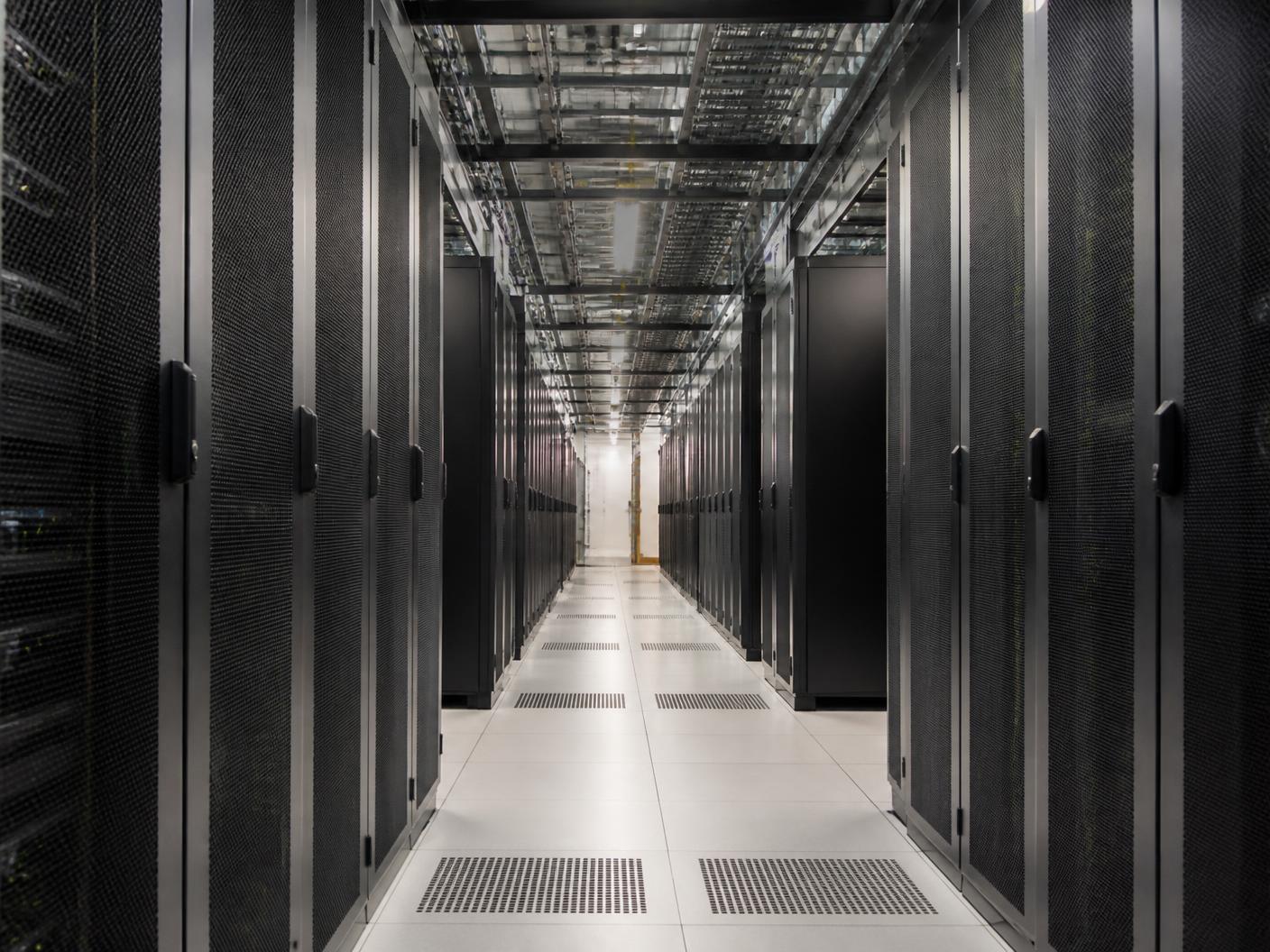
- Data centers underpin cloud computing, artificial intelligence, enterprise IT, telecommunications, financial services, e-commerce, healthcare, manufacturing and government operations.
- Precedence Research estimates the global data center market at USD 386.71 billion in 2025, rising from USD 430.18 billion in 2026 to approximately USD 1,103.70 billion by 2035, a CAGR of 11.06% from 2026 to 2035.
- Six operating models — enterprise, cloud, colocation, modular, hybrid and managed — trade control against cost, speed and scalability in different ways.
- Power distribution, cooling and mechanical reliability are the three infrastructure pillars where non-ferrous metal products enter the value chain.
- South Africa's delivery ecosystem is concentrated in Gauteng, spanning engineering consultancies, EPC contractors, main construction firms and specialist electrical engineers.
A data center is a centralized location — a room, a building or a complex — that contains servers, storage devices, networking equipment and other systems used to collect, process, store and distribute digital information. The global data center market comprises those physical facilities together with the IT infrastructure and services built around them.
Data centers form the backbone of the digital economy. They support cloud computing, artificial intelligence, enterprise IT, telecommunications, financial services, e-commerce, healthcare, manufacturing and government operations. For organizations in engineering, energy systems, cooling and industrial materials, that makes the sector less a technology story than an infrastructure one.
Global market size
According to Precedence Research (last updated 7 July 2026), the global data center market size is estimated at USD 386.71 billion in 2025 and is predicted to increase from USD 430.18 billion in 2026 to approximately USD 1,103.70 billion by 2035, expanding at a CAGR of 11.06% from 2026 to 2035.
- Estimated global market size, 2025
- USD 386.71BEstimated global market size, 2025
- Projected market size, 2026
- USD 430.18BProjected market size, 2026
- Projected market size by 2035
- USD 1,103.70BProjected market size by 2035
- CAGR, 2026–2035
- 11.06%CAGR, 2026–2035
The market is growing due to the increasing adoption of cloud computing and artificial intelligence, and the rapid growth of digital data generation worldwide.
The six data center models
Facilities are not interchangeable. Each model resolves the same tension — control against cost, speed and scalability — in a different way, and each implies a different procurement pattern for power, cooling and mechanical systems.
- Enterprise data centers
- Privately owned and operated by a single organization to support internal IT operations. They provide maximum control, security and customization, making them suited to businesses handling sensitive data or mission-critical applications. These facilities often include redundant power, cooling and network systems to ensure high availability, and they require significant capital investment and skilled personnel to maintain.
- Cloud data centers
- Hosted by third-party providers and delivering computing resources over the internet. They offer flexibility, scalability and cost efficiency, allowing organizations to pay for resources on demand. They suit businesses that need rapid deployment, remote access and reduced infrastructure management, supporting virtualized environments that scale dynamically with fluctuating workloads.
- Colocation data centers
- Provide rack space, power, cooling and physical security for businesses that own their servers but do not want to maintain a full facility. Organizations benefit from lower costs, reliable connectivity and geographic flexibility — particularly useful for companies with distributed operations or those expanding without building new infrastructure.
- Modular data centers
- Pre-fabricated, scalable units that can be deployed quickly to meet growing IT demands. They are energy-efficient and flexible, allowing capacity to be added incrementally, and are often used in remote locations or for temporary high-capacity needs as a cost-effective alternative to traditional construction.
- Hybrid data centers
- Combine on-premises infrastructure with cloud resources, balancing control and flexibility. They enable data redundancy, disaster recovery and optimized workloads by distributing resources across private and public environments — suited to organizations that need security for sensitive data and scalability for variable workloads.
- Managed data centers
- Operated by third-party service providers who handle deployment, monitoring, maintenance and security, either partially or fully. Managed services suit medium to large businesses that want to offload operational responsibility while maintaining high availability and compliance.
| Model | Principal trade-off |
|---|---|
| Enterprise | Maximum control, high cost, requires expertise |
| Cloud | Flexible, scalable, cost-efficient, less direct control |
| Colocation | Lower investment, reliable, suitable for distributed hardware |
| Modular | Rapid deployment, scalable, energy-efficient |
| Hybrid | Combines control and flexibility, supports redundancy |
| Managed | Outsourced operations, reduces maintenance burden |
Choosing the right type depends on business size, budget, security requirements and scalability needs, ensuring that IT infrastructure aligns with organizational goals and operational demands.
Where industrial inputs enter the value chain
Behind the digital narrative sits a physical one. According to Termomecanica's industry profile, the company is a leading Brazilian processor of non-ferrous metals, especially copper and its alloys, producing both semi-finished and finished goods. Its portfolio illustrates precisely where industrial materials meet data center construction.
Power supply and distribution
- Aluminum bus bars for electrical purposes
- Copper rods, bars, sections and rolled products
Cooling and HVAC systems
- Refrigeration tubes (Termotubes)
- Industrial tubes for cooling circuits
Mechanical and structural reliability
- Bronze TM 23
- Bronze ingots and anodes
- Aluminum tubes
Bus bars and copper alloys ensure efficient electrical distribution and grounding. Refrigeration tubes and industrial tubes form the backbone of cooling systems. Bronze and aluminum products provide mechanical durability and structural support.
Termomecanica is a member of the ABDC — Associação Brasileira de Data Center — and its product portfolio supports three pillars of data center infrastructure: energy systems, where copper busbars, aluminum bus bars and refined copper wire are used in power distribution, switchgear and electrical connections; cooling systems, where refrigeration tubes, cooling pipes and bronze bushings are integral to liquid cooling, chilled water and HVAC systems; and structural or mechanical systems, where bars, rods and sections are used in server rack supports, cable management and mechanical assemblies.
The South African delivery ecosystem
Data center capacity is delivered by an ecosystem, not a single buyer. In South Africa that ecosystem is concentrated in Gauteng and spans engineering consultancies, quantity surveyors, EPC and high-voltage specialists, main construction contractors, specialist architects and infrastructure equipment providers. The organizations below were identified in our review of the South African market.
| Organization | Segment / role | South African location |
|---|---|---|
| AECOM | Engineering, design and construction management | Centurion (head office); 263A West Avenue, Pretoria |
| Arup | Engineering and design consultancy | 5 Parks Boulevard, Oxford Parks, Dunkeld, Johannesburg |
| WBHO Construction | Main construction contractor | 53 Andries Street, Wynberg, Johannesburg |
| Rider Levett Bucknall (RLB) | Quantity surveying, cost and project management | Johannesburg |
| H&MV Engineering | Electrical and high-voltage engineering and construction | South Africa operations |
| ISF Group | Engineering, EPC and data center infrastructure | Johannesburg / Gauteng |
| EDS Engineering | Civil and structural engineering and project delivery | Pretoria; Stellenbosch |
| Tri-Star Construction | Construction contractor | Centurion, Gauteng |
| Abbeydale | Main / turnkey construction | Gauteng |
| B2 Architects | Data center architecture and design | Gauteng |
| MWK Engineering | Electrical and electronic engineering | Roodepoort, Gauteng |
| Ingenium Engineers | MEP and data center engineering | Randburg, Gauteng |
| nVent | Electrical connection and protection, data center infrastructure | South African market presence |
| LYT Architecture | Architecture and turnkey design | Melrose Arch, Johannesburg; Port Elizabeth |
| Tiber Construction | Main construction contractor | Gauteng / Johannesburg area |
| ENZA Construction | Main construction contractor | Gauteng / Johannesburg area |
| Vertiv | UPS, cooling, power and data center infrastructure | No 17 Thornhill Office Park, 94 Bekker Road, Vorna Valley, Midrand, 1686 |
Segment descriptions and locations are recorded as identified during this research. Organizations are listed to describe the market ecosystem; inclusion does not imply any commercial relationship with Momentum Miles.
What this means for market entry
Three implications follow for organizations approaching this market. First, the model matters: an enterprise facility, a colocation campus and a modular deployment specify materials on different timelines and through different intermediaries. Second, specification happens early — engineering consultancies and MEP designers shape what is ultimately bought long before a contractor is appointed. Third, the concentration of the delivery ecosystem in Gauteng means market presence is a question of relationships with a defined set of engineering and construction organizations rather than broad geographic coverage.
Understanding that structure — who specifies, who procures, who installs — is the difference between a product that is technically suitable and a product that is commercially reachable.
Sources
- Precedence Research, global data center market sizing (last updated 7 July 2026), as cited in the supplied research.
- Termomecanica industry profile and product portfolio, as cited in the supplied research.
- Associação Brasileira de Data Center (ABDC) membership, as cited in the supplied research.
- Momentum Miles Research — Operations.
Considering what this means for your organization?
Momentum Miles works with leaders evaluating markets, corridors and expansion decisions — turning intelligence into a defensible commercial position.
Related insights.

The U.S. Market in 2026: Growth Engines, Uncertainty and Strategic Opportunity
Economic structure, the four drivers shaping 2026, and a sector-by-sector map of the U.S. market for organizations assessing entry or expansion.
September 1, 2026 · 8 min read
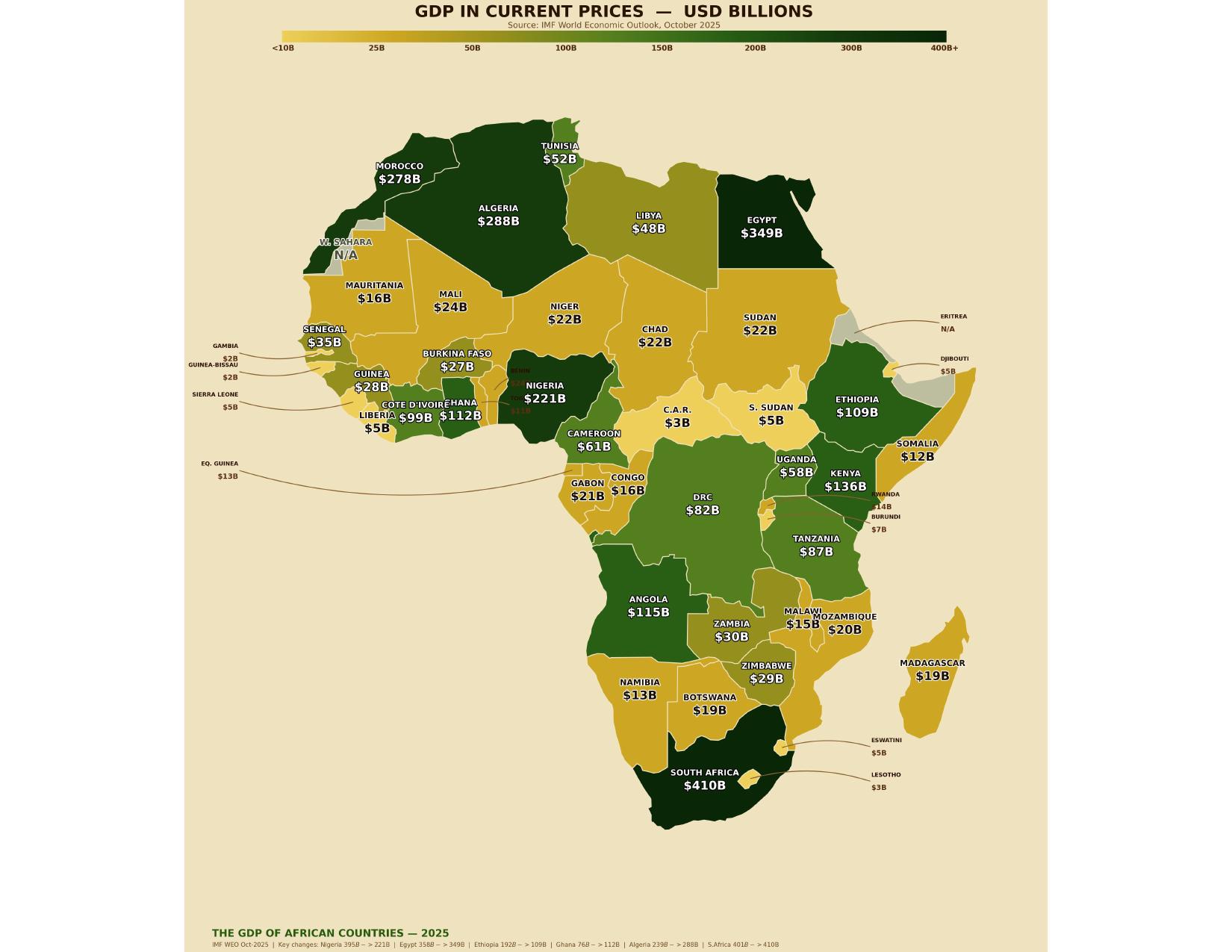
Africa GDP 2025: Mapping Economic Scale Across the Continent
Nominal GDP across African economies in current prices, and how macroeconomic scale should be used as one input into market prioritization.
August 12, 2026 · 5 min read
Singapore Market & Trade Intelligence: Positioning Across Asia and Emerging Trade Corridors
Singapore's economy, trade structure and principal partners, plus the MERCOSUR corridor and the Singapore–Australia Free Trade Agreement.
August 25, 2026 · 11 min read